
Caffeine Strips vs Coffee: Which Gives Better Energy?
When it comes to getting an energy boost, caffeine strips and coffee offer two very different experiences. Here's a quick breakdown:
- Caffeine strips: Work in 5–15 minutes, delivering a precise dose of caffeine directly through your mouth. They're portable, sugar-free, and gentler on the stomach.
- Coffee: Takes 30–60 minutes to kick in, with caffeine levels that can vary widely. It’s a sensory experience but may cause acid reflux, jitters, or teeth staining.
Quick Comparison:
| Factor | Caffeine Strips | Coffee |
|---|---|---|
| Onset Speed | 5–15 minutes | 30–60 minutes |
| Caffeine Dose | Consistent (40–50 mg) | Variable (259–564 mg) |
| Stomach Impact | Minimal | Can cause irritation |
| Portability | High | Requires brewing |
| Calories | Zero | 2–400+ (with milk/sugar) |
| Side Effects | Lower (with L-Theanine) | Higher risk of jitters/crash |
| Teeth Staining | None | Possible |
Caffeine strips are ideal for quick, predictable energy on the go, while coffee remains a favorite for its flavor and ritual. You can use both: start your day with coffee and keep caffeine strips handy for fast energy later.
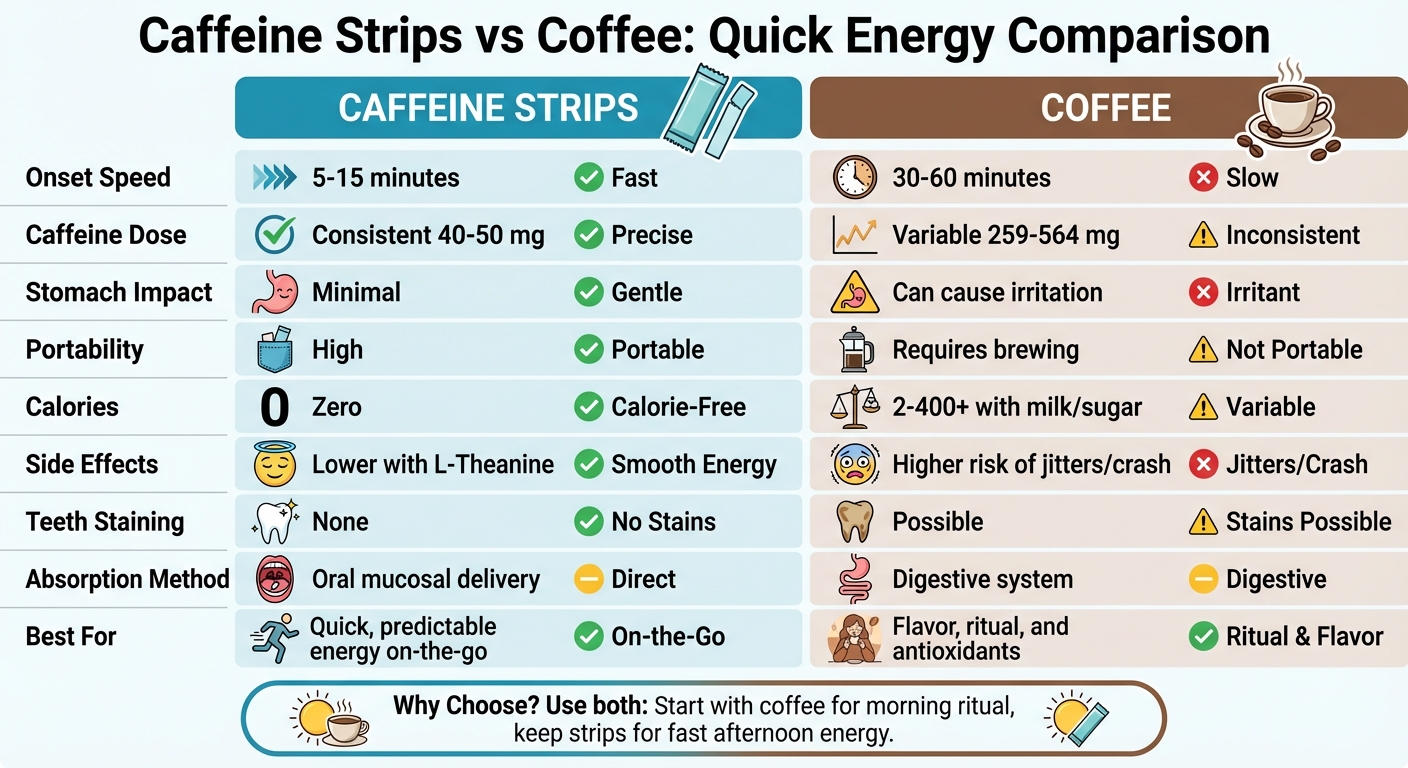
Caffeine Strips vs Coffee Energy Comparison Chart
Pros and Cons of Different Forms of Caffeine: gum, drinks, candy, etc.
sbb-itb-5c8392e
How Caffeine Strips Work
Caffeine strips are ultra-thin, dissolvable films that you place on your tongue or the inside of your cheek. They deliver caffeine quickly through the oral mucosa, skipping the digestive system entirely. Since this process avoids the liver's first-pass metabolism, more caffeine stays active in your body. This fast-acting mechanism makes caffeine strips a convenient alternative to traditional caffeinated drinks.
Oral Mucosal Delivery for Quick Effects
The mucous membranes in your mouth are rich in tiny blood vessels, making them perfect for rapid absorption. When a caffeine strip dissolves, the caffeine is absorbed directly into your bloodstream. This means you can start feeling the effects in as little as 5–10 minutes. Compare that to coffee, which usually takes 20–45 minutes to kick in.
Simple, Clean Ingredients
High-quality caffeine strips typically contain 40–50 mg of caffeine per strip - about half the amount found in a regular cup of coffee. Many also include ingredients like L-Theanine, which helps promote calm focus while minimizing jitters, and Vitamin B12, which supports energy production and mood. Unlike caffeine pills loaded with fillers or gummies that can include sugar alcohols (a common cause of bloating), strips are made with just the essentials. For instance, VELA Energy Strips pack 50 mg of caffeine, 30 mg of L-Theanine, and 1,000 mcg of Vitamin B12 into a sugar-free, vegan-friendly product.
This streamlined formula not only ensures efficient absorption but also keeps things simple and user-friendly.
Convenient and Travel-Friendly
Caffeine strips are designed with portability in mind. Each strip comes in a small, sealed package that's TSA-friendly and easy to stash in your wallet, pocket, or bag. They don’t require water or refrigeration, making them perfect for busy days or travel. Plus, the pre-measured dose ensures consistent caffeine intake, unlike coffee, where brewing methods can vary the strength.
These strips combine speed, simplicity, and practicality, offering a hassle-free way to stay energized throughout the day.
How Coffee Delivers Energy
Coffee provides energy through a gradual digestive process. Once consumed, caffeine travels through the esophagus, stomach, and small intestine - where most absorption occurs - before undergoing liver metabolism. This process generally takes 30 to 60 minutes for caffeine levels to peak. Let’s take a closer look at how this works.
Caffeine Absorption Through Digestion
Unlike caffeine strips that are absorbed directly through the mouth, coffee needs to pass through the entire digestive system. On an empty stomach, coffee typically takes 20–45 minutes to deliver its energy boost. However, eating food can delay this by an additional 20–30 minutes. Despite this slower process, caffeine from coffee is highly effective, with nearly 100% bioavailability in healthy adults.
Additional Compounds in Coffee
Coffee isn’t just about caffeine - it also contains natural compounds that influence how energy is released. For instance, caffeine helps break down glycogen, releasing glucose to fuel the body. An average 8-ounce cup of brewed coffee contains around 95 to 100 mg of caffeine, contributing to its energizing effects.
Common Side Effects: Acid, Bloating, and Jitters
The digestive journey that coffee takes can also bring some drawbacks. For instance, coffee stimulates the release of gastrin and hydrochloric acid in the stomach, which can lead to heartburn and irritation. Additionally, it relaxes the lower esophageal sphincter (LES) - the muscle that prevents stomach contents from rising into the esophagus - potentially causing acid reflux. About 40% of regular coffee drinkers experience issues like heartburn, acid reflux, or stomach discomfort.
Caffeine-related side effects like jitters and energy crashes are also common. The caffeine content in coffee can vary significantly; a 2014 study found that "medium" cups from the same coffee shop ranged from 259 to 564 mg of caffeine. This inconsistency can lead to unintentional overconsumption, resulting in shaky or anxious feelings. On top of that, many popular coffee drinks contain sugar and milk, adding 150 to 400 calories per cup. These extra calories can lead to bloating and even a sugar crash later in the day.
Caffeine Strips vs Coffee: Direct Comparison
When it comes to caffeine intake, caffeine strips and coffee offer very different experiences. These differences extend beyond how quickly they work - they also impact your stomach, energy levels, and even your daily habits.
Side-by-Side Comparison Table
| Factor | Caffeine Strips | Coffee |
|---|---|---|
| Absorption Speed | 5–15 minutes | 30–60 minutes |
| Energy Onset | Rapid, via oral mucosal delivery | Delayed, through the digestive system |
| Convenience | High – pocket-sized, no water needed | Low – requires brewing or a café visit |
| Dosage Precision | Fixed and exact (e.g., 40 mg, 50 mg, 100 mg) | Highly variable (e.g., 259–564 mg in a medium cup) |
| Risk of Crash/Jitters | Lower, especially with added L-Theanine | Higher – prone to a spike-and-crash cycle |
| Stomach Impact | Minimal, as it bypasses digestion | High – acidic (pH 4.5–5.5) and can cause reflux |
| Calorie Content | Zero | 2–5 for black coffee; 150–400+ with milk/sugar |
| Additional Ingredients | Often includes L-Theanine, B-Vitamins, and natural flavors | Contains natural antioxidants and tannins |
| Dental Impact | No staining | May stain teeth and erode enamel |
Caffeine strips are designed for quick and reliable energy. They can start working up to 4.8 times faster than coffee, making them ideal for those who need an immediate boost. Meanwhile, coffee's caffeine content varies significantly, sometimes more than twofold, depending on the preparation. For individuals sensitive to coffee's acidity - around 40% of coffee drinkers report stomach irritation - strips offer a gentler alternative. With precise dosing and rapid absorption, they provide steady energy without the jitters or crashes often associated with coffee. Plus, their portability makes them a convenient choice for busy lifestyles.
Benefits of Caffeine Strips for Energy
Caffeine strips offer a modern solution for energy delivery, combining speed, convenience, and compatibility with today’s busy lifestyles.
Quick Energy Without the Crash
Caffeine strips work fast - delivering energy in just 5 to 10 minutes, which is up to 4.8 times quicker than coffee. This speed comes from their unique design: the strip dissolves on your tongue and absorbs directly through the mouth’s lining.
What’s more, these strips provide a steady energy boost throughout the day. Many advanced formulas incorporate time-release technology to avoid the usual spike-and-crash effect. Some even include L-Theanine, an ingredient known for promoting calm focus, to counteract any jittery side effects of caffeine.
Ideal for Health-Conscious Women
For those mindful of their health, caffeine strips are a great match. They’re sugar-free, zero-calorie, and vegan-friendly. Each strip delivers a precise dose of 40–50 mg of caffeine, making it easy to manage your intake.
Unlike coffee, caffeine strips skip the stomach, so they don’t cause acid reflux or bloating - common concerns for about 40% of coffee drinkers. They also won’t stain teeth or damage enamel. For women juggling work, workouts, and travel, the compact, pocket-sized format means no brewing, no cleanup - just a quick, mess-free energy boost whenever you need it.
VELA Energy Strips: A Premium Option
VELA Energy Strips stand out with a formula that combines 50 mg of caffeine, 30 mg of L-Theanine, and 1,000 mcg of Vitamin B12. This blend ensures fast energy paired with steady focus. The strips are vegan, non-GMO, and produced in an FDA-registered, GMP-certified facility. Each batch is third-party tested to guarantee potency and purity, so you can trust the quality of every dose.
Priced at $39.95 for a 30-strip tin - or $29.96 per tin with a subscription - VELA strips cost about $0.99 per day. They deliver quick energy without stomach discomfort or inconsistent dosing. Users have rated them an impressive 4.72 out of 5 stars based on 29 verified reviews, often praising their jitter-free energy and convenience for long workdays or pre-workout routines.
Why Coffee Remains Popular
Coffee isn't just about getting a caffeine boost; it's about the experience. Unlike caffeine strips, which focus on delivering quick and consistent energy, coffee offers a sensory journey and a connection to daily rituals and traditions. It’s this blend of function and enjoyment that keeps coffee at the heart of so many lives.
Flavor and Daily Ritual
One of coffee's biggest draws is its rich sensory appeal. The aroma of freshly brewed coffee, the warmth of the cup in your hands, and the variety of flavors - ranging from nutty to fruity to chocolatey - make it a treat for the senses. As Ian Musgrave, Senior Lecturer in Pharmacology at the University of Adelaide, explains:
Coffee offers more caffeine and a superior taste profile.
The act of brewing coffee also adds to its charm. Whether you prefer a French press, drip coffee, or another method, the process itself can feel like a ritual. It’s a deliberate way to start the day, often shared with others, making coffee a social experience as much as a personal one. Plus, the ability to customize your cup - choosing between Arabica or Robusta beans, selecting a roast level, or adding milk, cream, or sweeteners - ensures there’s a perfect cup for everyone.
Natural Antioxidants
Beyond its energizing effects, coffee offers health benefits that set it apart. Packed with natural antioxidants, coffee can support heart and brain health. Chlorogenic acid, one of its primary antioxidants, is believed to play a role in these benefits when consumed in moderation. Studies even suggest that drinking 3 to 4 cups of coffee daily may lower the risk of conditions like Parkinson's disease, type 2 diabetes, and liver disease.
Unlike energy drinks loaded with synthetic additives, coffee is simple: just water and roasted beans. This natural composition provides a steady energy boost without the sharp highs and lows often associated with other caffeine sources. It’s not just a drink - it’s a wholesome, balanced way to fuel your day.
Conclusion: Choosing Your Energy Source
When it comes to choosing between caffeine strips and coffee, it all boils down to your lifestyle and what you need to power through the day. Coffee is still a favorite for those who love the comforting ritual of brewing a cup, savoring the rich flavors, and enjoying the natural antioxidants it offers. It’s more than just a drink - it’s an experience that caffeine strips don’t attempt to replicate. This makes coffee ideal if you value tradition and sensory enjoyment.
On the flip side, caffeine strips shine for those with jam-packed schedules. They provide energy in just 5–10 minutes, thanks to oral mucosal absorption. Plus, they’re zero-calorie, sugar-free, and won’t stain your teeth or trigger acid reflux - a common downside for many coffee drinkers.
Another big advantage? Precision. Coffee’s caffeine content can vary widely, while each strip delivers a consistent, measured dose. This helps you avoid overdoing it, keeping jitters at bay while giving you more control over your daily intake. Their portability also makes caffeine strips a practical option for on-the-go energy boosts.
You don’t have to pick just one, though. Start your day with coffee to enjoy its antioxidants and comforting ritual, then keep caffeine strips handy for a quick, clean energy boost in the afternoon. They’re perfect for pre-workout energy or situations where a traditional drink isn’t convenient. For example, products like VELA Energy Strips combine clinically studied ingredients to provide sustained energy without the drawbacks of conventional caffeine sources.
FAQs
How many caffeine strips equal one cup of coffee?
One caffeine strip packs around 40 mg of caffeine, which is comparable to a small shot of espresso or about half of an 8 oz cup of brewed coffee (which contains 95-100 mg). To match the caffeine in a full cup of coffee, you’d need about 2-3 strips. Of course, how your body absorbs caffeine and your personal tolerance can influence this comparison, so treat it as a general guideline.
Can I use caffeine strips and coffee in the same day?
Yes, it's possible to use caffeine strips and drink coffee on the same day. Caffeine strips deliver energy quickly by absorbing through the lining of your mouth, while coffee provides a slower release of caffeine along with other compounds. That said, it's important to keep track of your total caffeine consumption to avoid side effects like jitters, restlessness, or trouble sleeping. Be mindful of your personal tolerance levels and any health considerations when combining these sources.
Are caffeine strips safe if I have acid reflux?
Caffeine strips can be a safer option for those with acid reflux when used in moderation. Unlike coffee, they don’t have the acids that often cause reflux symptoms. That said, it’s a good idea to check with a healthcare professional to get advice tailored to your specific needs.